
Sunrise: A Song of Two Humans
The Details
U.S., 1927
Directed by F.W. Murnau
Starring George O’Brien, Janet Gaynor, Margaret Livingston
Academy Awards® for Best Cinematography, Best Actress (Janet Gaynor), Unique & Artistic Production, 1928
Approx. 94 min.
The Description
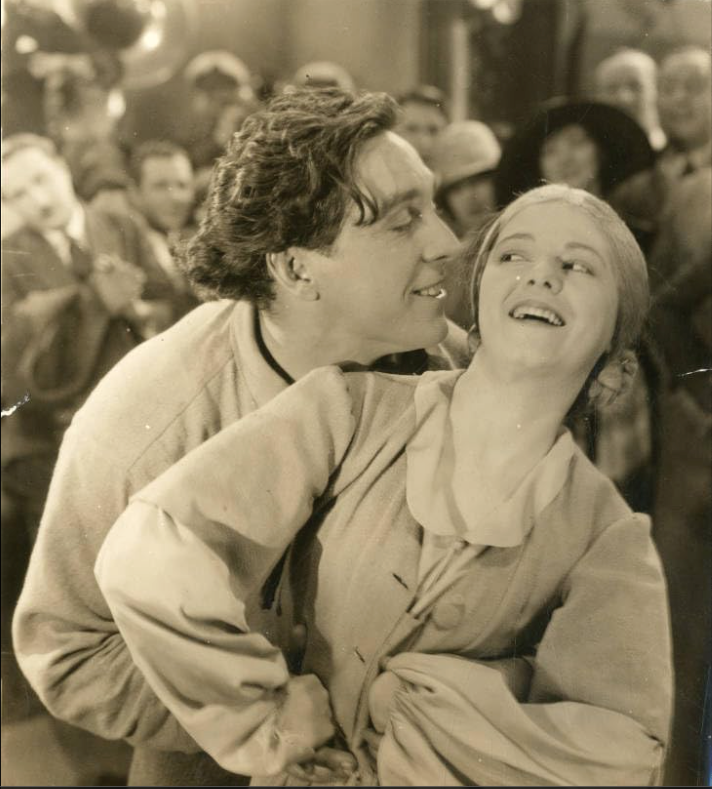
The idyllic marriage of a farmer (George O’Brien) and his wife (Janet Gaynor) is threatened when he falls for a cigarette-smoking, jazz-loving vamp from the city—so hard that he contemplates murdering his wife.
F.W. Murnau and his screenwriter Carl Mayer were given an almost unlimited budget and artistic freedom for their first Hollywood picture, creating a nearly title-less visual poem. From the seduction scene in the misty, moonlit marshes, to the carnival-like trip to the city, to the hair-raising storm on the lake, this is a work of photographic pyrotechnics, from cameras moving on rails set in the roof of the set, to the lights of the city shimmering on the lake at night, to pictorial evocation of sounds and cries, in the last gasp of silent film. Under Murnau’s direction, Charles Rosher and Karl Struss won the very first Oscar® for cinematography; while Janet Gaynor won Best Actress (for this and two other films); plus a never-repeated award for “Unique & Artistic Production”.
Sunrise: A Song of Two Humans is noted for:
Visual Spectacle: Extraordinary camera movement, expressive framing, and luminous cinematography—achievements that earned the film the first Academy Award for Cinematography. Its sets are equally remarkable, moving fluidly between stylized urban streets, pastoral farmland, and a dazzling carnival, each environment shaped to reflect inner states of mind rather than literal realism.
Emotional Depth: A deceptively simple story that explores temptation, guilt, forgiveness, and marital devotion with uncommon psychological intensity. Without dialogue, the film renders emotional conflict through gesture, rhythm, and visual metaphor, achieving a level of intimacy that remains strikingly modern.
Artistic Synthesis: A landmark fusion of German Expressionism and Hollywood narrative cinema. Sunriseintegrates image, movement, music, and performance into a unified emotional experience, often cited as one of the purest examples of cinema functioning as its own language rather than an extension of theater or literature.
Reviews
“A breathtaking display of cinematic virtuosity, creating one of the masterworks of the art form...”
– Richard Brody, The New Yorker
“Possibly the greatest achievement of both Murnau and the silent film.”
– Pauline Kael
“Simply put, there’s before SUNRISE and after it…It’s easily the most modern film of the silent period…you can see Murnau not only obliterating the barriers of cinema’s vocabulary but also constructing a new, sophisticated language before your very eyes.”
– David Fear, Time Out (New York)
“Silent cinema reaches its acme with the movement of Murnau’s camera through the vaporous fields of an invented America. Superimpositions and dissolves achieve an almost mythical state of deliquescence. Light not only flows but melts. Thirty years after its release, the ultimate cinephile magazine Cahiers du Cinéma declared SUNRISE ‘the single greatest masterwork in the history of cinema.’ It’s an assertion as reckless, romantic, and extravagant as the movie itself.”
– J. Hoberman, Village Voice