
The Individual and the State in Cinema
A four-session online film discussion series exploring how master auteurs use narrative, composition, and sound to depict the human spirit under pressure from the machinery of the State.
Sessions via Zoom begin March 10, 2026 at 7:30PM
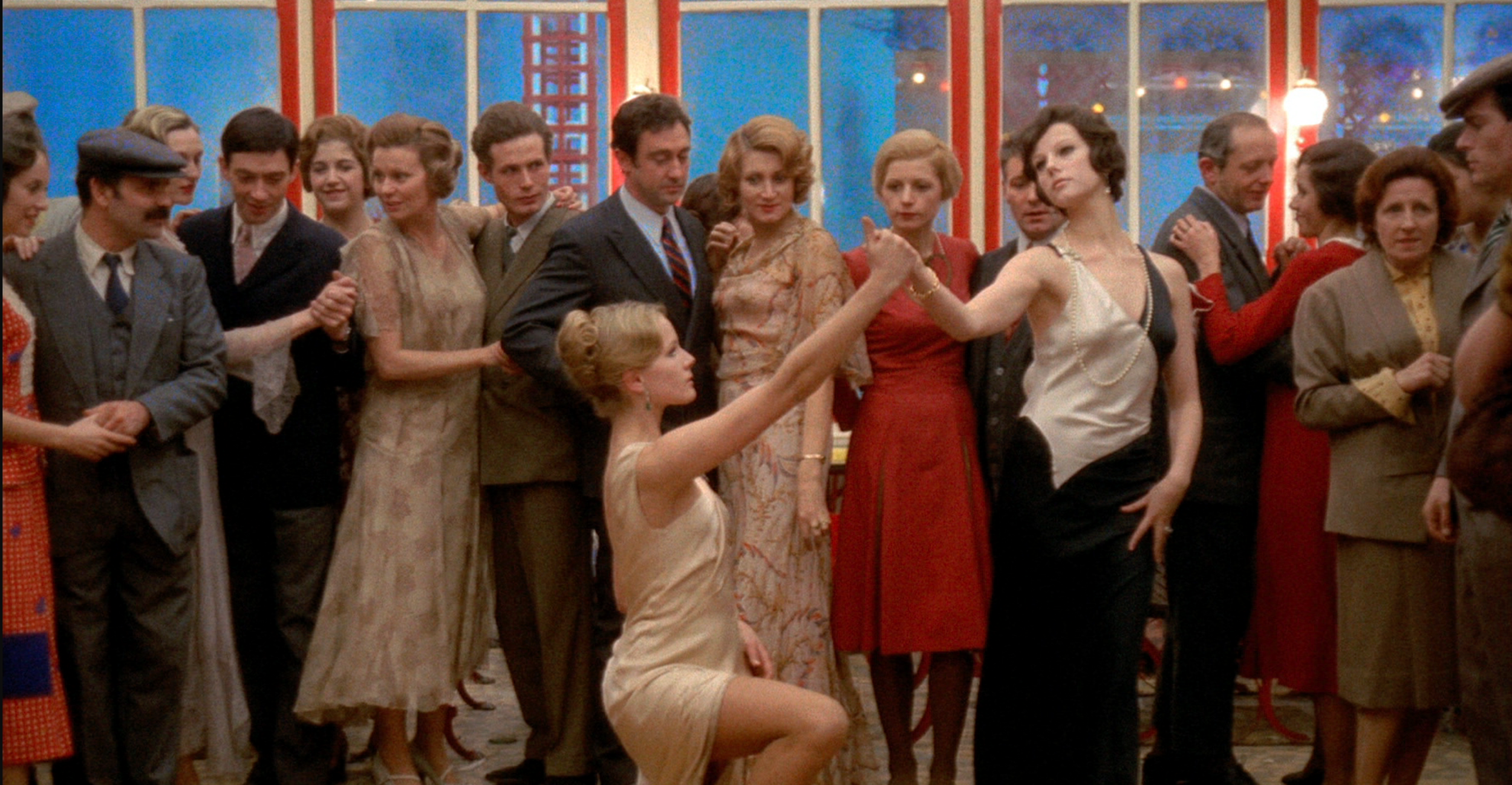
The Conformist (Bernardo Bertolucci, 1970)
Over four sessions, we’ll explore how cinema dramatizes the individual’s encounter with the State during periods of profound instability. While the settings range from the opulent courts of Versailles to the cold offices of the Stasi, each film centers on a human story: a protagonist caught within the machinery of authority as it enters survival mode.
The emphasis is historical and cinematic. We follow figures who must navigate structures—be they monarchies, revolutionary tribunals, or sprawling bureaucracies—that test the limits of identity and conviction. These works invite us to experience history through character, tracing journeys that are often defined more by moral trial and psychological adaptation than by simple victory or defeat.
Our discussions will focus on how the medium of film constructs the "Theater of Power." We will analyze how cinematic space, ritual, legal procedure, and the persistent hum of surveillance create a unique pressure around the central figure. By examining how performance and framing align us with—or distance us from—these choices, we’ll see how different eras have imagined what it means to stand at the mercy of the State, and why these high-stakes encounters remain such compelling cinematic experiences.
Films in Focus
The Individual and the State in Cinema
Session I: The revolutionary spirit, for better or worse.
The Battle of Algiers (Gillo Pontecorvo, 1966) A raw look at the street-level struggle between a local resistance and a colonial power.
Danton (Andrzej Wajda, 1983) Two revolutionary leaders go head-to-head as the movement they started begins to turn on itself.
Colonel Redl (István Szabó, 1985) An ambitious officer sells his soul to climb the social ladder of a dying empire.
Session II: Class, etiquette, and money still matter during revolutions.
Barry Lyndon (Stanley Kubrick, 1975) An outsider tries to con his way into the 18th-century elite, only to be crushed by their unwritten rules.
The Conformist (Bernardo Bertolucci, 1970) A man joins a fascist secret police force simply because he’s desperate to feel like he belongs.
Farewell, My Queen (Benoît Jacquot, 2012) The panic and chaos of the French Revolution as seen by the servants left behind in the palace.
Session III: Justice becomes a weapon when the State starts to crack.
Paths of Glory (Stanley Kubrick, 1957) High-ranking generals put their own soldiers on trial to cover up their own failures on the battlefield.
A Man for All Seasons (Fred Zinnemann, 1966) A battle of wits between a man who refuses to compromise his values and a King who demands total loyalty.
Spartacus (Stanley Kubrick, 1960) While a slave army fights for freedom, politicians in Rome use the war to grab power for themselves.
Session IV: When the State feels threatened, paperwork becomes a weapon too.
When the State feels threatened, paperwork becomes a weapon too.
The Lives of Others (Florian Henckel von Donnersmarck, 2006) A surveillance officer begins to care about the people he is supposed to be spying on.
Brazil (Terry Gilliam, 1985) A low-level clerk gets caught in a deadly trap after a simple typing error makes him an enemy of the state.
The Madness of King George (Nicholas Hytner, 1994) The government descends into a power struggle when the King begins to lose his mind.
Sessions are scheduled to meet on:
March 10, 2026
March 24, 2026
April 7, 2026
April 21, 2026
Each session begins at 7:30PM and runs 90 minutes.
The State in Cinema is a film discussion series for viewers interested in how cinema explores political power, authority, and resistance, through close viewing, historical context, and guided conversation.
The State in Cinema: Power and the Individual is a live discussion series for people who enjoy engaging deeply with film, how authority is portrayed, how institutions shape individual lives, and why certain images of power endure long after the credits roll.
Across four sessions, we’ll examine films that approach the State not merely as a political framework, but as a lived historical reality. These stories unfold through courts, ministries, revolutions, palaces, and surveillance systems, but always through the experience of individuals moving within them. We’ll consider how order is established through ritual and law, how violence is rationalized or obscured, and how shared myths sustain legitimacy across eras.
Rather than focusing on plot alone, discussion centers on how cinematic choices—performance, framing, pacing, sound, and spatial design—shape our understanding of authority, obedience, resistance, and transformation. The goal is not debate, but close attention: how films construct meaning and how historical context deepens that construction.
Each session is conversation-driven. I provide selected clips, background context, and guiding questions; participants bring their observations and interpretations. The emphasis is on thoughtful exchange and careful viewing.
This is a focused series for people who value sustained, reflective conversation about film and the way cinema illuminates history through story.
The State in Cinema: Order, Violence, Myth meets over four live sessions, each 90 minutes in length, scheduled on alternating weeks.
Participants watch the films independently in advance of each session. Meetings take place on Zoom and are discussion-based, with guided prompts, selected clips, and close attention to how cinematic form shapes representations of power, authority, and resistance.
Active participation is encouraged. Sessions are conversational and structured to support thoughtful exchange rather than lectures or presentations.
Format & Logistics
Number 0f Sessions: 4
Length of each session: 90 minutes
Schedule: Alternating weeks
Platform: Zoom (link provided after registration)
Viewing: Films watched independently prior to sessions