
Session Four: Attention, Memory, and Modern Experience
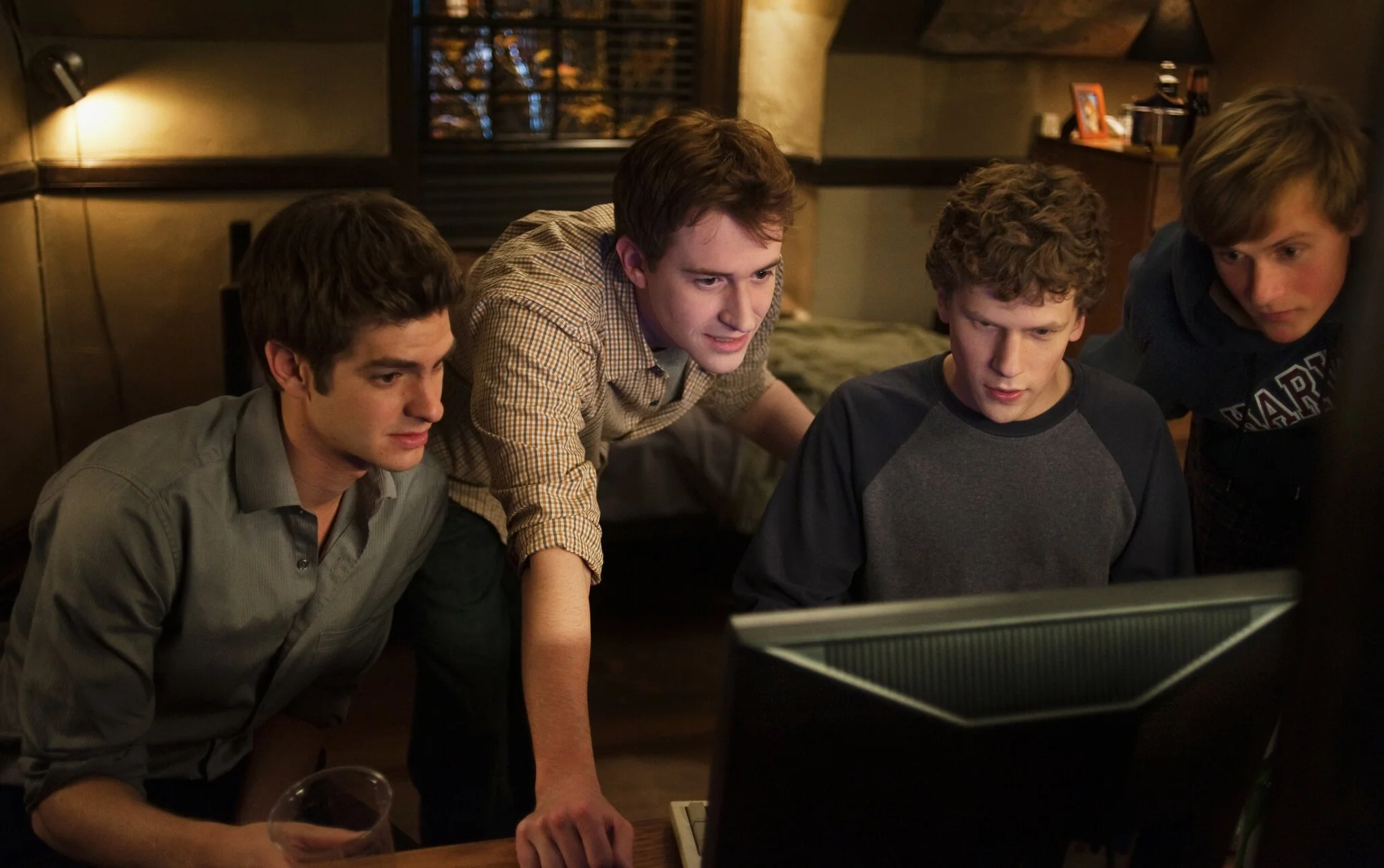
The Social Network (2010)
Directed by David Fincher
In sharp contrast, The Social Network uses rapid editing, overlapping dialogue, and propulsive music to create velocity and pressure. Information arrives quickly; scenes overlap in time; momentum replaces reflection. The film demonstrates how editing and sound can compress experience, shaping thought, power, and identity in an accelerated world. Its craft makes speed itself an emotional condition.
Where to Watch
Here are some options for streaming the films in session four:
Columbus (2017)
Columbus explores grief and connection through the language of architecture. Set in Columbus, Indiana—a modernist mecca featuring buildings by Saarinen, Pei, and Meier—the film uses meticulously composed frames to position its two characters as elements within architectural space rather than against it. Long takes and symmetrical compositions allow the buildings to function as emotional containers, their clean lines and deliberate structures mirroring the characters' attempts to order their interior lives. Kogonada's restrained approach transforms architecture into a way of thinking about inheritance, obligation, and the possibility of change.
John Cho and Haley Lu Richardson deliver performances of quiet precision, their conversations about buildings becoming conversations about everything they cannot directly say. The film's patience—its willingness to let meaning accumulate through composition, stillness, and the interplay of light and concrete—invites viewers to experience architecture not as backdrop but as protagonist.
Tuesday, February 24, 2026 · 7:30 PM (PT) · Live on Zoom
Our final session looks at how contemporary films use editing and sound to shape memory, attention, and emotional understanding—whether through quiet fragments of recollection or the relentless momentum of modern systems.
Aftersun (2022)
Directed by Charlotte Wells
Aftersun constructs memory through fragments: brief moments, repeated gestures, ambient sound, and pop music that resurfaces like an emotional echo. The film’s restrained editing and use of silence allow meaning to accumulate gradually, mirroring how memory often works—indirectly, imperfectly, and after the fact. Rather than explaining its emotions, Aftersun invites the viewer to assemble them through attention and feeling.
“Something magical occurred when Wells collaborated with the inspired editor Blair McClendon. That’s when the filmmaker saw what she had, and what her mosaic of memory, feeling, loss and love could become.”