
Session One
Power in Moments of Upheaval
Session One centers on three historical crises when governments trembled and the direction of nations hung in the balance.
These are powerful stories of conviction and compromise, ambition and betrayal, courage and fear. Heroes rise, rivals clash, and ordinary people are drawn into events larger than themselves, all set against states struggling to preserve control during periods of profound change.
We will explore how filmmakers transform these turbulent chapters into gripping drama, shaping our sense of who holds authority, who challenges it, and what is at stake when the future of a society feels uncertain.
The Battle of Algiers (1966, dir. Gillo Pontecorvo)
A landmark of historical filmmaking, Pontecorvo’s film recreates the Algerian War with documentary-style immediacy. Shot on location with nonprofessional actors, it captures the atmosphere of a city under strain.
The film is less about ideology than about process: how an empire attempts to maintain control, how resistance movements organize, and how everyday life is transformed in periods of crisis.
We will explore how its newsreel aesthetic shapes our perception of historical truth.
Synopsis
Pontecorvo's landmark film reconstructs (or reimagines?) the Algerian independence struggle of the 1950s through the eyes of both sides — the FLN resistance network operating in the Casbah and the French paratroopers sent to dismantle it. Shot on location with nonprofessional actors in a newsreel style that still feels startlingly immediate, the film refuses simple heroism: it shows how a liberation movement organizes, how colonial authority responds, and how both sides rationalize what they do. In addition to its artistic achievement as a Neo-Realist masterpiece with a score by Ennio Morricone, it raises the endlessly debatable question of whether or not it is propaganda.
Danton (1983, dir. Andrzej Wajda)
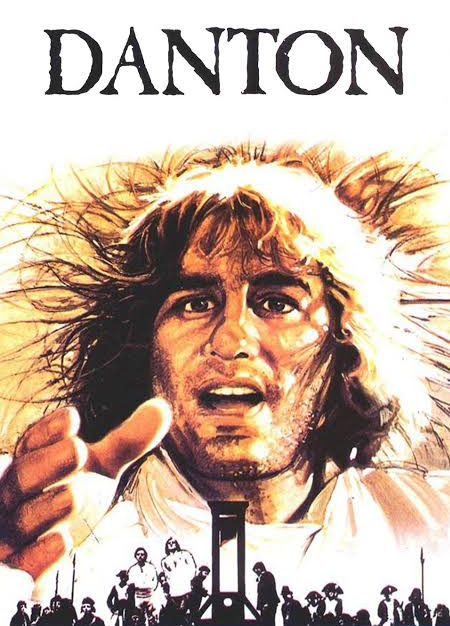
Set during the French Revolution’s Reign of Terror, Danton dramatizes a turning point when revolutionary ideals confront the realities of governance.
Through courtroom speeches and private negotiations, the film examines how movements evolve once they assume power. Gérard Depardieu’s performance gives human scale to a moment often reduced to textbook summary.
The focus here is historical drama: how personalities, institutions, and rhetoric shaped the fate of a nation.
Synopsis
Danton and Robespierre were close friends and fought together in the French Revolution, but by 1793 Robespierre was France's ruler, determined to wipe out opposition with a series of mass executions that became known as the Reign of Terror. Danton, well known as a spokesman of the people, had been living in relative solitude in the French countryside, but he returned to Paris to challenge Robespierre's violent rule and call for the people to demand their rights. Robespierre, however, could not accept such a challenge, even from a friend and colleague, and he blocked out a plan for the capture and execution of Danton and his allies.
Colonel Redl
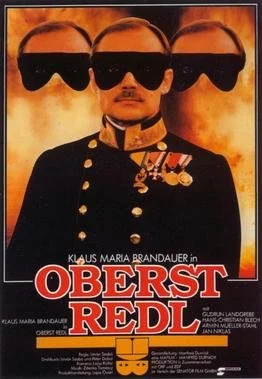
Colonel Redl (German: Oberst Redl (original title); Hungarian: Redl ezredes) is a 1985 biographical drama film by Hungarian director István Szabó. The plot, set in the period before World War I, follows the rise of Alfred Redl, an officer in the Austro-Hungarian Empire. Redl, who comes from a humble background, enters military school as a boy and an illustrious military career comes his way by virtue of his loyalty to the crown. He is appointed the head of an intelligence-gathering unit, but his attraction to men eventually causes his downfall.
The screenplay, loosely inspired by British playwright John Osborne's play A Patriot for Me, charts the rise of inter-ethnic tensions in Austro-Hungary, which were to bring about the assassination in Sarajevo and the empire's eventual disintegration.
The film stars Klaus Maria Brandauer, Jan Niklas and Gudrun Landgrebe. It was nominated for an Academy Award for Best F
Synopsis
Set during the fading glory of the Austro-Hungarian empire, the film tells of the rise and fall of Alfred Redl, an ambitious young officer who proceeds up the ladder to become head of the Secret Police only to become ensnared in political deception.
State of Siege (1972, dir. Costa-Gavras)
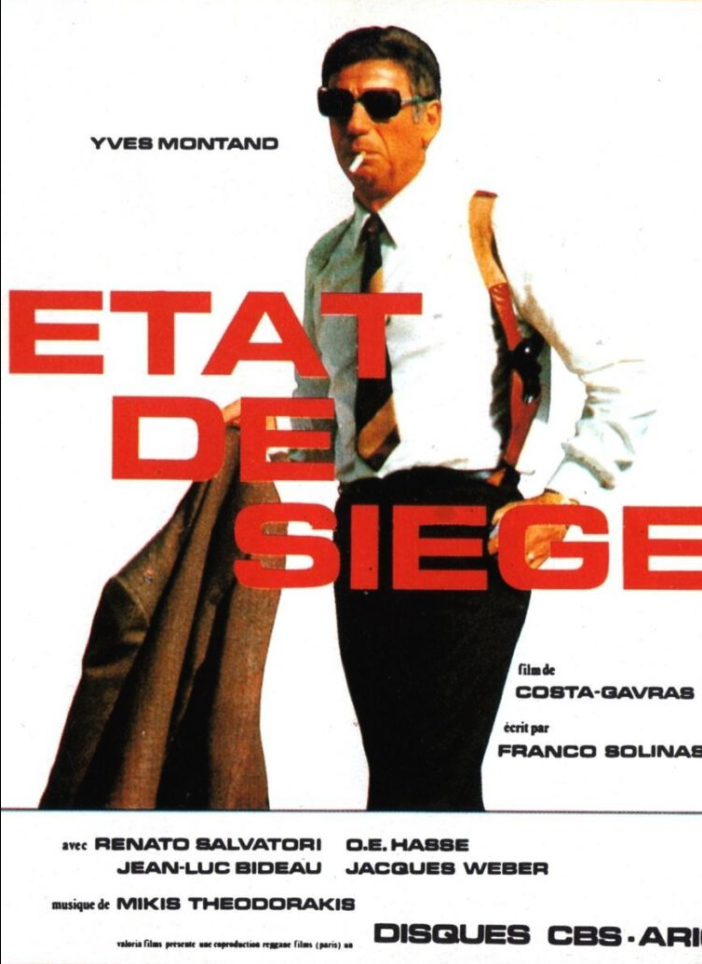
Based on real events in Uruguay in the early 1970s, this tightly constructed film reconstructs a kidnapping that exposed the hidden mechanics of Cold War diplomacy.
Rather than sensationalizing events, it proceeds methodically — showing how governments respond to crises and how international pressures influence domestic decisions.
The film becomes a case study in how history unfolds through procedure, negotiation, and competing narratives.
Synopsis
Assigned to South America, US official Philip Michael Santore is employed by a counterinsurgency agency. His position makes him a target for a local band of guerrillas, and, before long, Santore is kidnapped. As a prisoner, he undergoes interrogation, shedding light on the violent situation in the country. Once the insurgents are done with their questioning, they must decide whether Santore lives or dies.
Where to Watch
Below are streaming links for the films featured in Session One of the series.
You may also wish to consult JustWatch.com, which aggregates viewing options across platforms and can help you determine whether a film is available through one of your existing subscriptions.
Criterion Channel also frequently streams the films we discuss.
Please note that streaming availability changes frequently. While the links below are accurate at the time of posting, they may expire or shift to different platforms.