
Thoughts on Paris, Texas + How Nicholson Treated The Passenger Like Fine Art
Tremendously enjoyed (and was moved) watching Paris, Texas and very much looking forward to our discussion on Tuesday. From the first frame I felt as if I had wandered into a world of images that called to mind Edward Hopper and William Eggleston, both of whose works I could (and probably have) spent hours gazing at at various points in my life (Eggleston at the ROSEGALLERY in Bergamot Station, and Hopper, of course, at the Whitney). The long, quiet shots; the vast, empty landscapes; the way light and color carry emotion more than dialogue — it’s cinema as visual art first, narrative second (and in that regard it will be interesting to hear what you think of Sam Shepard's script). The quality of the stream via Amazon was gorgeous.
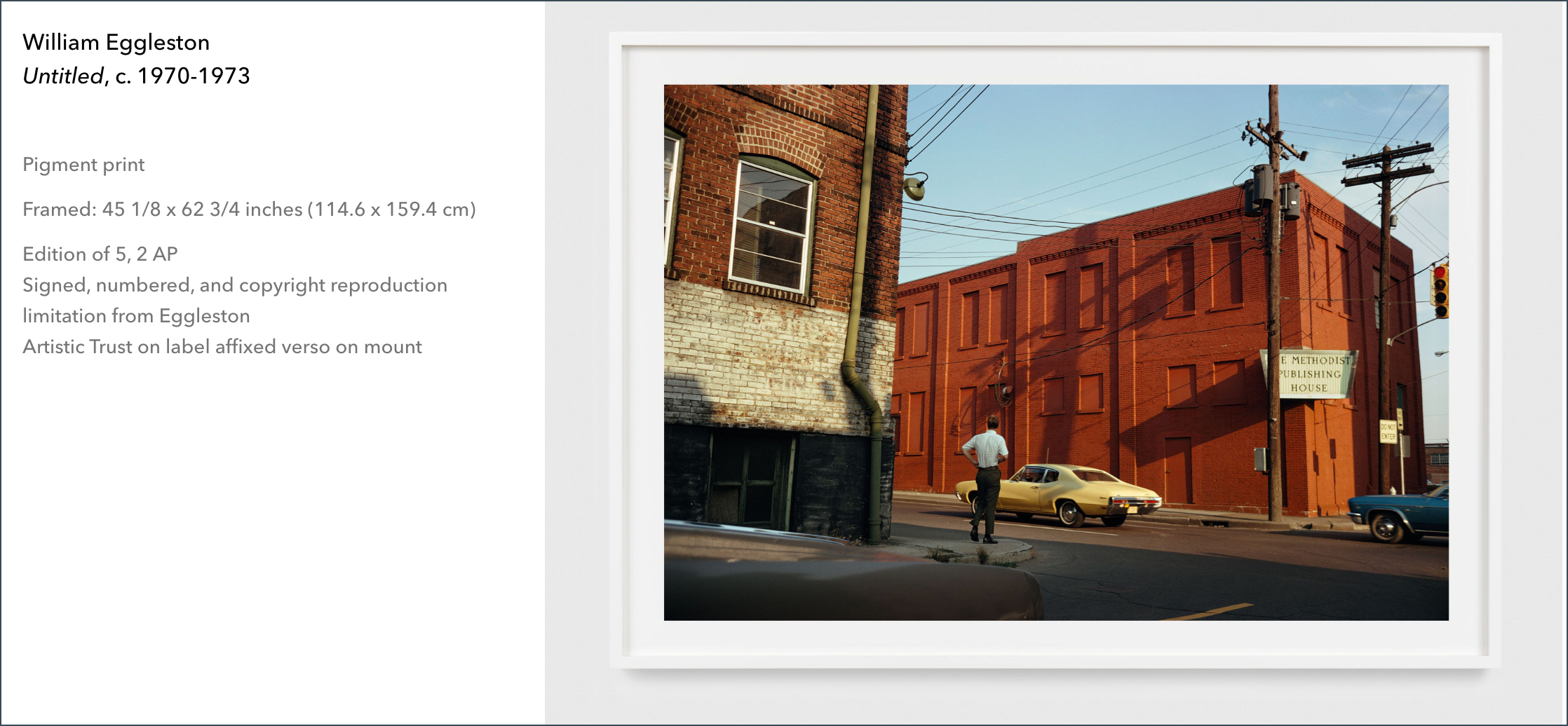
That framing got me thinking about how Jack Nicholson literally treated Passenger as a work of art in terms of ownership.
Here’s the gist of what happened: When The Passenger hit theaters in 1975, critics loved it, but audiences didn’t, and it faded fast. By the early 1980s, it had virtually disappeared (was hard to find in decent prints, with limited, or no home video). Nicholson, who’s called it one of his favorite roles, grew frustrated with MGM’s handling and worried about its integrity and provenance. After a separate MGM project he was attached to collapsed in the late 1970s, he leveraged outstanding obligations and had his attorney negotiate compensation in the form of ownership of Passenger. Around 1983, working with his attorney, Ken Kleinberg, Nicholson got MGM to transfer global rights, the negative, and physical elements to him personally.
From there, Nicholson approached the film more like owning a cherished painting than a commercial asset. He admired it deeply and didn’t want it circulating in poor-quality prints, bad transfers, or cheapened editions. So he largely withheld it from distribution for more than two decades; nearly 30 years of scarcity that added to its mythic status and built an appetite among cinephiles.
Around 2003, Michael Barker, co-president of Sony Pictures Classics, approached Nicholson with a proposal to restore the film, ensure its integrity as the original Antonioni cut, and convinced him to greenlight a full restoration (from the original elements, reinstating footage that had been cut from the U.S. version); this assured a respectful theatrical re-release. The long absence made the return feel like an event. Nicholson recorded a rare (perhaps his only) full audio commentary track for the 2006 DVD — reflective, generous, and full of on-set memories 30 years later.
Curious what you all thought of Paris, Texas and the other films, and looking forward to hearing your takes on Tuesday.
Ted